What is a microlot?
A microlot is a small amount of coffee kept separate from a larger blend, so one place, one picking, and one way of processing stay identifiable in the cup.

Lake Atitlán
A microlot is a small amount of coffee kept separate from a larger blend, so one place, one picking, and one way of processing stay identifiable in the cup.
Most coffee sold as a country name is mixed so the cup stays steady from bag to bag. A microlot is the smaller bet. The coffee from one cooperative delivery, or one family’s picking, is kept apart. If the wash or the weather changes, the cup changes with it.
Around Lake Atitlán, that place is volcanic highland. The useful question is not "is it Guatemalan?" It is which town, which mill, and how the fruit was washed and dried.
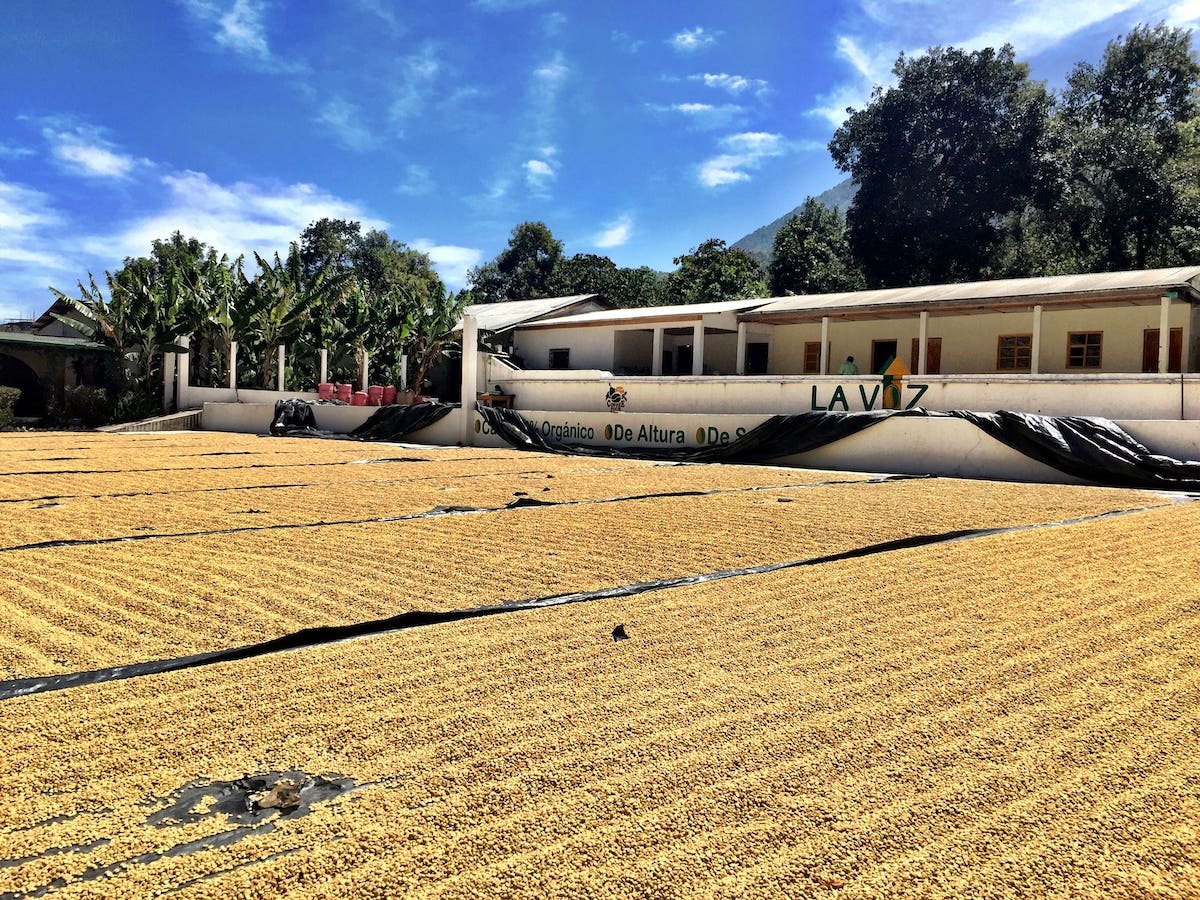
The drying patios in Ceiba’s photograph are at La Voz que Clama en el Desierto, a coffee cooperative in San Juan La Laguna on Lake Atitlán. The wall of the mill reads Orgánico De Altura. Public descriptions checked on 23 October 2026 say the cooperative grows organic Arabica in volcanic soil, washes it, and dries it on patios. Importer sheets commonly list Typica, Bourbon, and Caturra at about 1,300–1,550 meters.
Those details describe the cooperative. They are not a Ceiba bag, a roast date, or a price. The origin page lists the sources.
The lakeshore is wider than that sheet. Regional profiles put Traditional Atitlán around 1,400–1,800 meters, and some volcano-slope farms are published above 2,000 meters. Patios and raised beds are both used around the lake. This photograph is patios. Varieties grown around the lake and lots Ceiba can discuss are on their own pages.
A microlot is a small amount of coffee kept separate from a larger blend, so one place, one picking, and one way of processing stay identifiable in the cup.
The drying patios in Ceiba’s photograph are at La Voz que Clama en el Desierto, a coffee cooperative in San Juan La Laguna on Lake Atitlán.
Coffee is not available to order on this website yet. Send a question from the contact page.